Neuroscience-based Inner Communication: The Power of Recording to Quiet the Amygdala
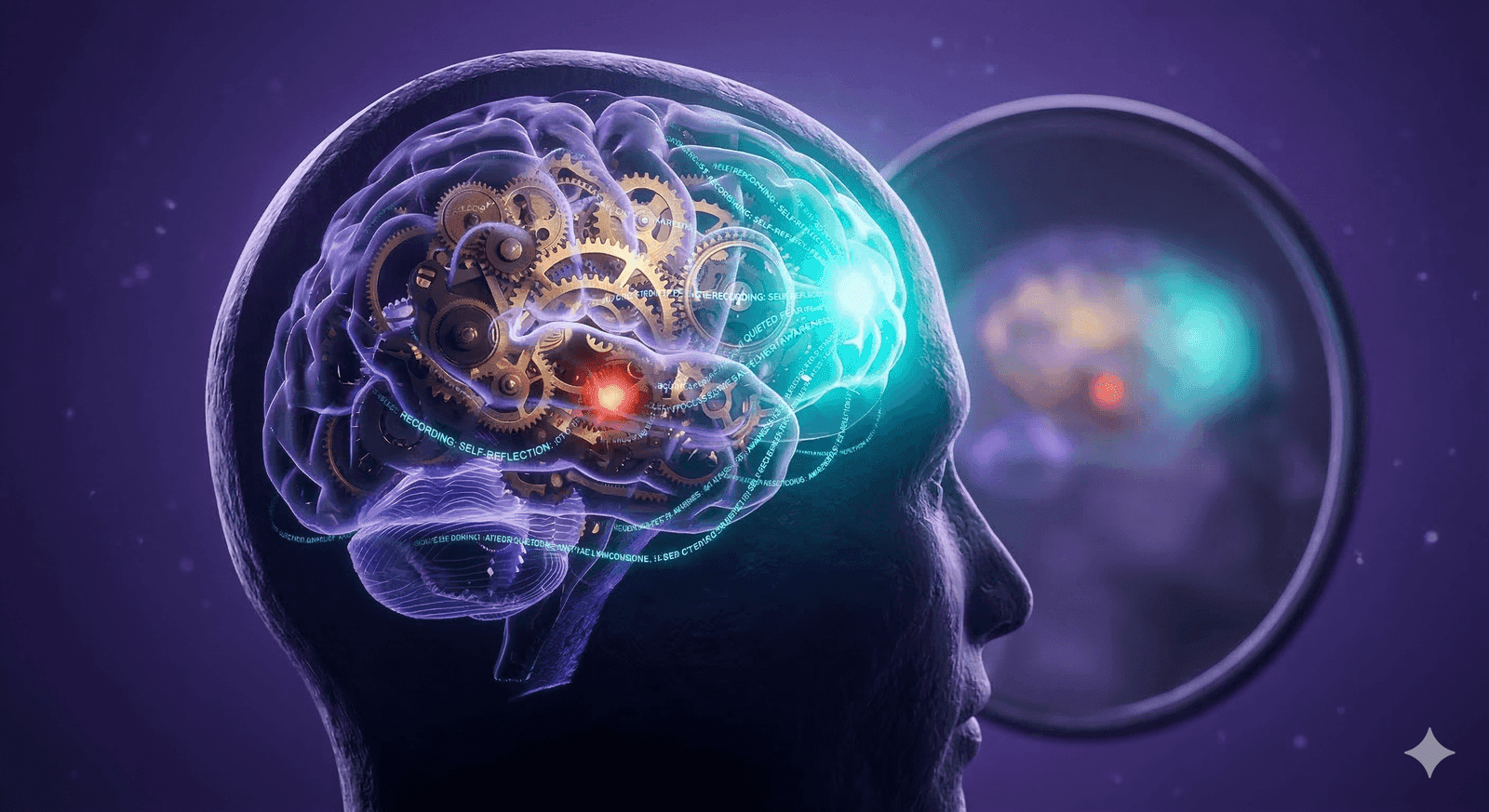
Introduction: Why Are We Controlled by Anger and Fear?
Everyone has experienced a sudden surge of anger in a stressful situation or intense anxiety before an important task. This isn't a character flaw; it's because our ancient survival mechanism, the Amygdala, has caused a 'hijacking.' When the amygdala senses a threat, it immediately triggers a 'Fight-or-Flight' response, paralyzing our rational thinking.
Recent neuroscience research and books like Inner Communication by Professor Ju-hwan Kim suggest 'Inner Communication' as a powerful tool to escape this emotional whirlpool and change oneself (Kim, 2023). Recording and reviewing are more than just data storage; they are sacred mental exercises that quiet the amygdala and activate the prefrontal cortex to awaken the 'Observing Self.' This article explores how recording corrects our self through neuroscientific principles.
The Seesaw Game of the Amygdala and Prefrontal Cortex
Our brain has an emotional brake and an accelerator.
Amygdala: The Emotional Accelerator
Located deep within the brain, the amygdala processes intense emotions like fear, anger, and sadness. When overactivated, it raises blood pressure and releases cortisol, the stress hormone. The problem is that our brain mistakes modern-day stressors (deadlines, others' opinions) for 'survival threats,' keeping the amygdala constantly active.
Prefrontal Cortex (PFC): The Emotional Brake
Located behind the forehead, the PFC is responsible for high-level cognitive functions like planning, judgment, and self-regulation. In particular, the ventromedial PFC (vmPFC) and ventrolateral PFC (vlPFC) are key regions for 'Top-down Regulation' that inhibit the amygdala's overreaction. The more active the PFC, the more objectively we can view situations without being swept away by emotions (Squire et al., 2012).
Recording is an act of forcibly awakening this PFC. The moment you verbalize and label vague emotions and anxieties and move them to paper or a screen, brain energy shifts from the amygdala to the PFC. According to Lieberman et al.'s fMRI research, the act of attaching a verbal label to an emotion (affect labeling) alone reduces amygdala activity while activating the right ventrolateral PFC (RVLPFC) (Lieberman et al., 2007). This suggests that the process of naming emotions through recording may engage a similar neural mechanism.
Metacognition: Awakening the Observing Self
Professor Ju-hwan Kim emphasizes the importance of the Observing Self in his book. The Observing Self refers to the 'I' that objectively observes the thoughts, emotions, and sensations occurring in my mind.
- Experiencing Self: "I'm so anxious right now, I'm in trouble." (Submerged in emotion)
- Observing Self: "Ah, a wave of 'anxiety' is currently hitting my mind. My amygdala has been activated." (Observing)
Awakening this Observing Self is the pinnacle of Metacognition. Recording is the most powerful means of separating the 'Thinking Self' from the 'Observing Self.' The process of re-reading recorded content (reviewing) is like sitting in a movie theater seat and watching the screen of your own life. This distancing allows us to maintain peace even in an emotional storm.
The Principle of Neuroplasticity: Correcting Yourself
"Awakening the Observing Self and correcting yourself" is not just a metaphor. Our brain has plasticity, and its physical structure changes through repeated stimuli.
Synaptic Reorganization
When we repeatedly review specific goals or engage in positive inner communication, the synaptic connections of those neural circuits are strengthened. At the same time, as PFC-centered regulatory circuits grow stronger, they become more effective at inhibiting the amygdala's overreaction. This is the very 'process of correcting the self.'
Furthermore, the habit of recording and reviewing can train the PFC's regulatory circuits over time, potentially contributing to a reduction in Allostatic Load — the cumulative wear caused by chronic stress. As the brain's capacity for emotion regulation improves, we develop greater resilience.
Long-term Memory and Identity
Our identity is determined by what we remember. By applying Ebbinghaus's Spaced Repetition principle to self-reflection, we can stably transfer the values and goals we aspire to from short-term memory into long-term memory. The act of reviewing your principles (Policy) every day is like declaring to your brain, "This is my new identity."
Application in MemoryAgent: A Neuroscientific Self-Correction System
MemoryAgent is designed as a 'Gym for the Mind' that goes beyond a simple productivity tool, strengthening the user's PFC and facilitating healthy inner communication.
1. Recording Interface That Aids PFC Activation
When a user inputs thoughts or emotions, the AI agent analyzes and categorizes them into 'GOAL,' 'MEMORY,' or 'LIST.' This process itself acts to stabilize the amygdala and activate the PFC by converting (labeling) vague emotions into clear information.
2. AI Briefing Providing the Observing Self's Perspective
MemoryAgent provides a daily morning briefing that shows the user's yesterday as objective data. AI feedback like "You set these goals and achieved these things yesterday" serves as a mirror that helps the user view themselves from the perspective of the Observing Self.
3. Spaced Repetition for Self-Correction
It shows the 'Policy' or 'Core Values' set by the user according to the Ebbinghaus cycle. This is 'Neuroplasticity Training' that silences the amygdala and imprints a healthy, PFC-centered reaction system in the brain. Every time a user receives a review notification, they are reminded of "who they wanted to be" and gradually correct themselves.
4. Greeting Inducing Inner Communication
The greeting "Try to quiet your amygdala and activate your prefrontal cortex" provided every time the service is turned on serves as a reminder to enter a metacognitive state.
Conclusion: Recording is the Chisel That Shapes the Self
Recording is not just a means of not forgetting. It is a sedative that quiets the wild amygdala, a stimulant that awakens the dormant PFC, and a gateway to meeting the Observing Self, a higher dimension of the self.
Through recording, we observe the self of yesterday, imprint the values we aspire to today into our brain, and correct the self of tomorrow in a better direction. We hope this repetitive process with MemoryAgent deeply carves circuits of peace and wisdom into your brain.
Start awakening your Observing Self and correcting yourself at MemoryAgent now →
References
-
Kim, J. H. (2023). Inner Communication: Mind Strength Training for Life's Transformation. Seoul: Influential. https://www.aladin.co.kr/shop/wproduct.aspx?ItemId=311899364
-
Lieberman, M. D., Eisenberger, N. I., Crockett, M. J., Tom, S. M., Pfeifer, J. H., & Way, B. M. (2007). Putting feelings into words: affect labeling disrupts amygdala activity in response to affective stimuli. Psychological Science, 18(5), 421-428. https://doi.org/10.1111/j.1467-9280.2007.01916.x
-
Squire, L. R., Berg, D., Bloom, F. E., du Lac, S., Ghosh, A., & Spitzer, N. C. (Eds.). (2012). Fundamental Neuroscience (4th ed.). Academic Press.